Immersive, interactive, responsive.
In the world of arts and specifically theatre, immersive has become an overused term. That isn’t to say I think we should stop using it, but I think that there are other terms that could and should be used alongside.
Jonathan Mandell, critic and journalist, wrote a great article about Immersive theatre for HowlRound in which he breaks it down into 5 components (which I won’t go into here, but you should read his work.) However, he also says, “‘immersive’ is [not] the same thing as ‘site-specific’, nor is it a synonym for ‘interactive’ or ‘participatory’.
I feel these terms are often more useful. Big, masked shows as put forward by Punchdrunk and Emursive prioritise immersion; a huge world that you can explore freely, watching the action unfold and exploring the artefacts in the space. The set and performance will be all encompassing, but rarely are you a part of that world – you are a bystander or voyeur passing through.
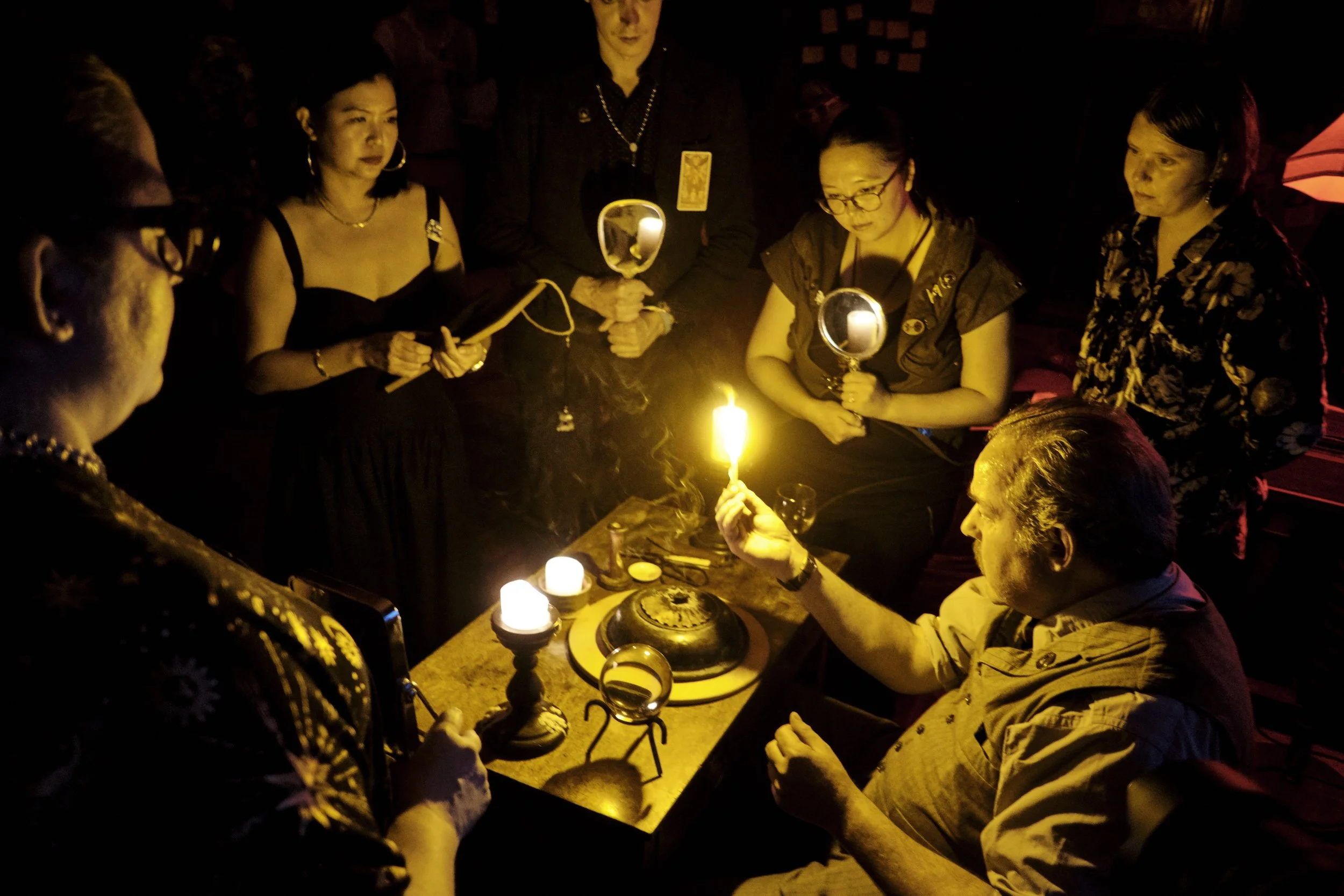
A group of guests taking part in a ritual - First Harvest 2025
Interactive theatre has much more emphasis on engagement with the world and the story. There is a risk when we mention ‘interactive’ the ideas that leap to mind are murder mystery parties, magic shows with audience volunteers or pantomime sing-along and heckling. However, in good quality interactive theatre, you are never really in the position of being in an awkward-not-sure-how-to-engage moment. There are some significant reasons for that.
- You are never just watching; you don’t switch from passive to active by being pulled onto stage.
- The audience are spread out – no one is watching you or judging you, they are all engaging in the same way
- They feel real. The actors in the space treat you like people.
- You’ll be so busy and engaged, you won’t have to think about what you are doing, you’ll just be doing it.
When I think of the world that we have created in the Key of Dreams, and the wildly different worlds, but with same ideas of responsive play, of Bridge Command (Parabolic), Jury Games (Exit Productions) and the critically acclaimed Mannikins (Deadweight Theatre), they place the audience in the action and give them agency to make a difference.
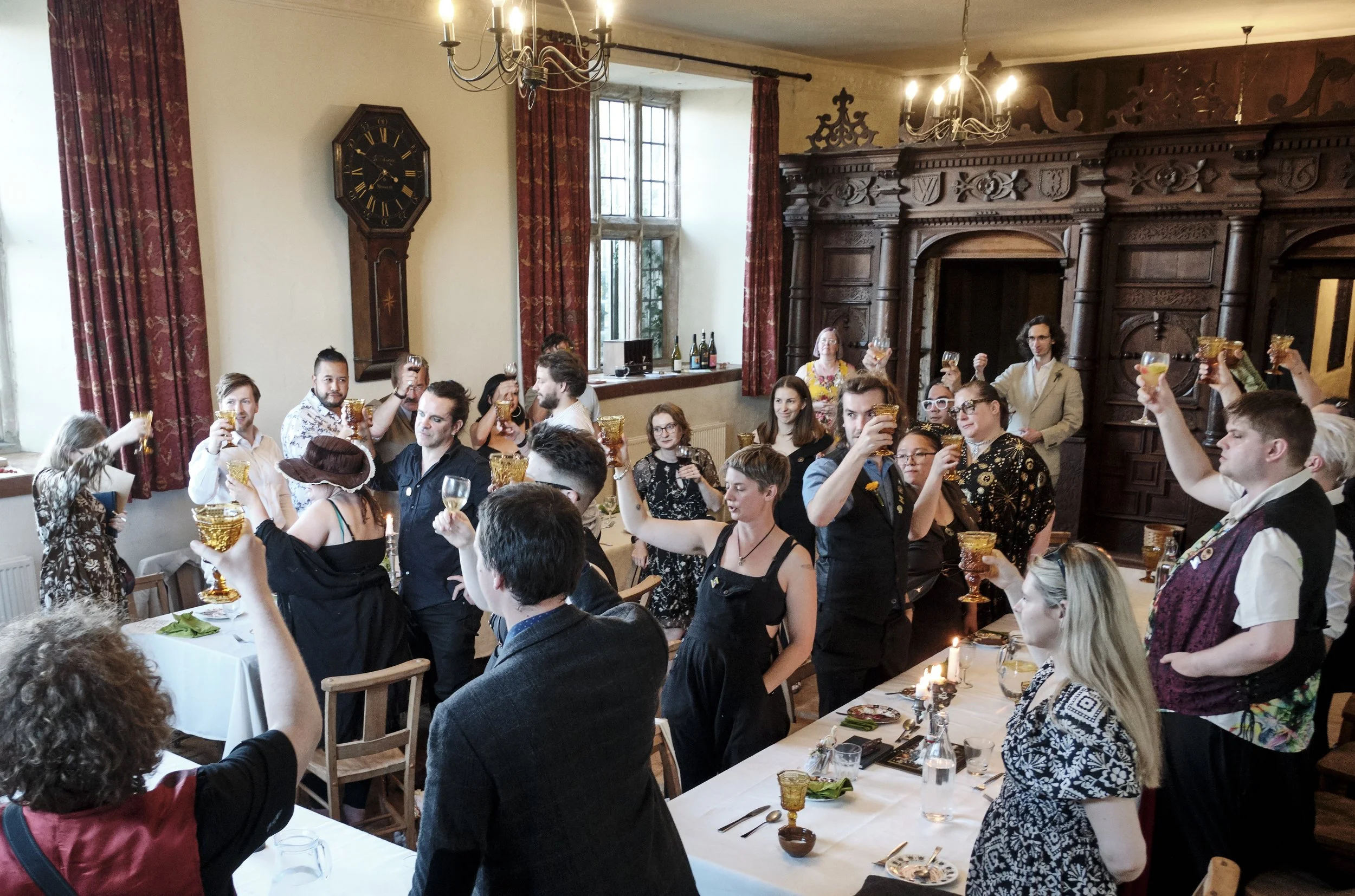
A toast at dinner
Isn’t that just role play?
Role-play, be it tabletop games or LARP are brilliant things and for people who are excited to develop a character, build costume and do a chunk of prep work it’s great. Most LARPs and TTRPGs have a good story to be told, but it is wildly variable based on what the players do.
In interactive theatre, the audience/players have a large amount of agency to affect the outcomes of the plot, but there are fixed moments and a clear story to be told. Bridge Command builds on each mission that is played and the player’s ‘character’ gains promotions. In Key of Dreams, there are a range of options that can be chosen, the combinations of which affect the endings (somewhere in the region of 6000+). But additionally, and I think more importantly, the characters (as performed by our phenomenal actors) will respond to you. The choices that they make, the way they interact with each other is directly affected by the way the guests interact with them.
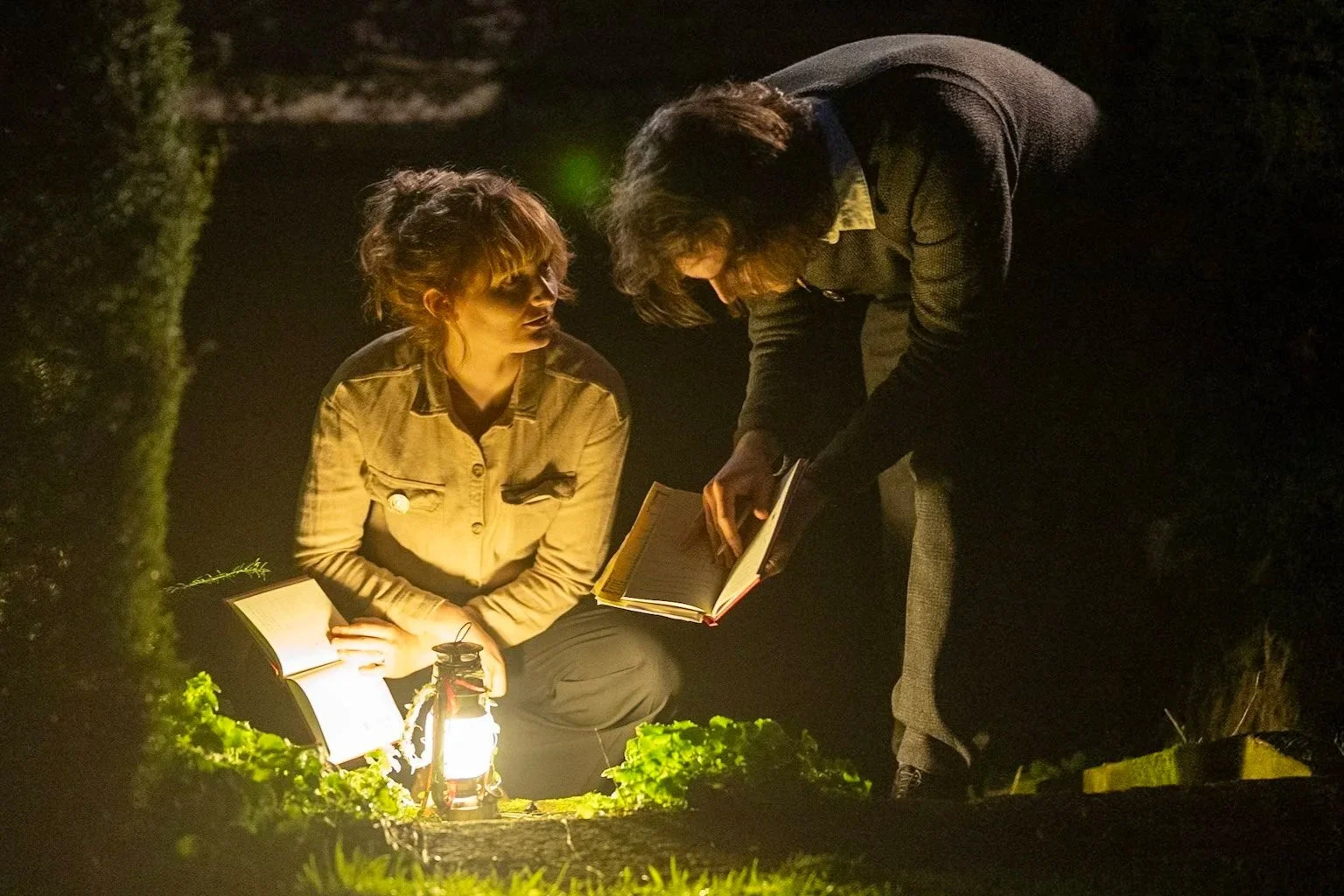
Guests discussing their discoveries and plotting
A narrative, roleplaying computer game is interactive. There is usually a branching narrative – if you choose a this opens paths b and c. But a computer game can never be truly responsive – it is programmed and reacts. In interactive theatre, there is likely to be a branching path, but it is so, so much more.
If you choose to help or betray a character, they will react to that, not in a set pattern of words, but how they treat you, react to you and how they talk about you to other characters and guests. If you make a choice that has negative consequences, that is your choice, but you can bet the characters of the world will have a view of what just occurred and as a result you.
The magic here is that despite how scary getting involved can be, the performers will meet you at your level and guide you through an experience. They remain in character, so you get to know them, and they you and it really isn’t long before you build a rapport. From that point, it stops feeling like a play, and it feels for a while like real life. I’ve had guests tell me that the guiding into the experience is so smooth that they don’t realise how much they have bought in, until the end when they have to return to the real world and it is that that feels jarring.
For an experience like this, you usually don’t need to prepare. You can come as yourself – though dressing up for the experience can help and be fun, it isn’t required. You don’t have to go in with a plan, and if you do, it will likely change. And for me, most importantly, no two experiences are the same.
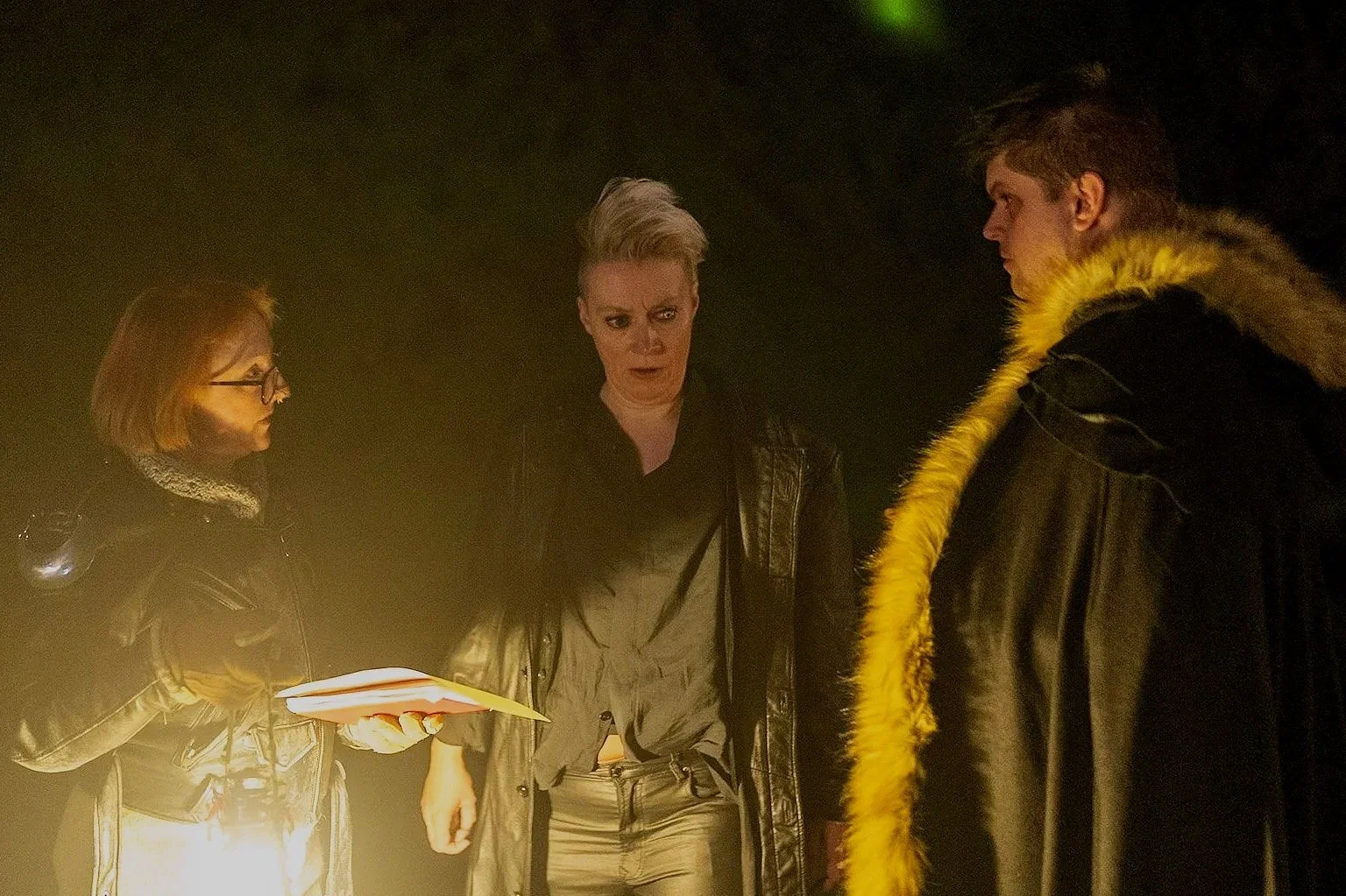
Two guests inform Dee what they have just learned
We have had guests return to Key of Dreams multiple times. Most make an effort to follow different story, or character, or make different choices. But the joy of this kind of storytelling, is that even if you came back and tried to do exactly the same thing a second time, the likelihood is that with other audience members making their choices, and interacting with the characters, the responses you get would not be the same anyway.
The world of interactive theatre is growing rapidly. There are so many experiences out there covering a range of genres, lengths and budgets. I know many of our readers attend a range of experiences, so join the conversation and let us and others know what we should be experiencing.
Keep an eye out for the next blog, which will be from Ivan, about interconnected systems that keep an interactive show running.
L